



Software vulnerabilities are discovered faster than most teams can fix them. Google’s new Gemini 4 Carbon model is an attempt to close that gap by bringing advanced AI reasoning directly into security work. Here is what it is, what it can do, and what it means for developers and businesses.
What Is Gemini 4 Carbon?
Gemini 4 Carbon is a specialized AI model from Google built for complex coding, reasoning, and cybersecurity tasks. Unlike a general-purpose chatbot that handles everything from recipes to emails, a specialized model is tuned for a narrower, higher-stakes domain. Because these capabilities are so powerful, Google is also taking a measured approach to who gets access and when.
How It Can Support Security Teams
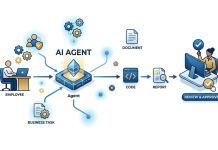
The model can analyze code, spot weaknesses, and flag potential risks, work that normally takes security engineers hours or days. It can also support threat investigation, helping teams understand how a flaw works and trace possible attack paths so they can prioritize what matters most. Beyond finding problems, Gemini 4 Carbon can propose patches, which helps developers correct security flaws faster. Used earlier in the process, it can also help developers catch risky coding patterns while they are still writing code, rather than after release.
What Sets It Apart
Earlier general-purpose models could answer security questions, but Gemini 4 Carbon is built around cybersecurity from the start. Google also reports improvements in secure code generation and in handling complex, long-running engineering tasks. That matters because real security work rarely fits into a single prompt. It often means sustained effort across large codebases, where context and consistency are essential.
Reported Benchmark Results
Google has shared results on three security benchmarks. On SEC-bench Pro, which measures how well a model identifies software vulnerabilities, Gemini 4 Carbon reportedly scored 88.2%. Its performance on ExploitGym, a benchmark that evaluates whether vulnerabilities can be exploited, reached 54.8%. Meanwhile, the model achieved 71.0% on CWE-bench, which assesses its ability to develop fixes for software weaknesses. These are strong numbers, but benchmarks measure performance on specific tests. They do not guarantee the same results in every real-world environment, where codebases are messier and context is harder to capture.
Why Access Is Limited
A model that is good at finding vulnerabilities can serve attackers as well as defenders. For that reason, Google is starting with a controlled rollout through its Fairwind Program for selected cyber defenders. The approach emphasizes safeguards, misuse prevention, and testing before broader availability. It also reflects a principle that will likely remain important: humans must stay in the loop when AI handles security-sensitive work.
What It Could Mean for Businesses
For organizations, the potential benefits are practical. AI-assisted vulnerability analysis could lead to faster security assessments, helping teams identify weaknesses sooner. Developers may spend less time investigating bugs and drafting first-pass fixes, which makes teams more efficient. Finding and fixing flaws earlier can also strengthen application security and reduce exposure. There may be cost and productivity gains from less manual effort, though actual savings will depend on implementation, testing, and human review.
Challenges and Limitations
AI-powered security is not a silver bullet. The model may produce false positives, flagging code that is not genuinely vulnerable. Generated patches can introduce new bugs or fail to address the root cause. Attackers may also try to use the same capabilities to discover and exploit weaknesses. Organizations must consider data privacy too, since sensitive code may not be safe to share with AI systems. Above all, security experts still need to validate findings, review patches, and test changes before deployment.
The Competitive Picture
Gemini 4 Carbon puts Google in direct competition with OpenAI and Anthropic as advanced coding and cybersecurity skills become central to enterprise AI. Specialized models like this could reshape AI-assisted software development, and security-focused AI may well become a standard part of enterprise development workflows.
What Comes Next
Google plans to expand access gradually, and feedback from cybersecurity professionals will help shape that process. Over time, developers and enterprise security teams may use the model more directly, as long as innovation stays balanced with responsible deployment.
Conclusion
Gemini 4 Carbon reflects Google’s push to advance AI-assisted software engineering and cybersecurity. It shows promise in detecting vulnerabilities, validating risks, and developing fixes, but it complements professional security teams rather than replacing them.
FAQs
1. What is Gemini 4 Carbon?
It is a specialized Google AI model focused on complex coding, reasoning, and cybersecurity tasks.
2. How can it help with cybersecurity?
It can detect vulnerabilities, help investigate threats, and suggest code fixes.
3. How is it different from Gemini 4 Argon?
Your outline doesn’t describe Argon, so add Google’s official comparison here before publishing.
4. Is it available to the public?
Not yet. Access starts with selected cyber defenders through the Fairwind Program, with gradual expansion planned.
5. Can it replace cybersecurity professionals?
No. Human experts are still needed to validate findings and review fixes.